Dr. Paresh Bang | Matruchhaya Spine Clinic

Meet Our Doctor
Dr. Paresh Bang
Consultant Spine Surgeon

Surgery for cervical myelopathy In Chhindwara
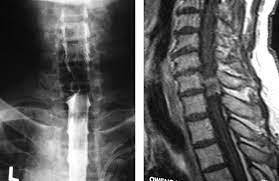
The goal of surgery is to relieve the pressure on the spinal cord and prevent further neurological deterioration. Common surgical approaches include decompression surgery, which removes the structures compressing the spinal cord.
Indications for Surgery:
- Aging : Cervical myelopathy can happen as the result of changes in the spine and other supportive tissues that can occur with aging and as a result of repetitive movements. As you grow older, the spinal canal may grow narrow as the tissue in your spine grows less supportive.
- Injury : A spinal injury can cause or speed up cervical myelopathy. Whiplash-type injuries can create traumatic tears in the structures supporting the spine and may cause fractures. This may cause the spine to get out of place. Some injuries can cause tissue swelling that puts pressure on the spinal cord as well.
Signs and symptoms of cervical myelopathy
Early signs include neck pain or stiffness. If untreated, spinal cord compression can lead to:
- Weakness or tingling in arms, shoulders, hands, or extremities
- Limited range of motion
- Loss of fine motor skills (e.g., grasping)
- Numbness in arms and hands
- Balance issues and walking difficulties
- Muscle spasticity
Prompt treatment is essential to prevent progression.
Surgery for Cervical Myelopathy:
The primary goal of cervical myelopathy surgery is to relieve spinal cord compression and stabilize the spine, preventing further neurological damage. The surgical approach depends on the cause and location of the compression.
- Anterior Cervical Discectomy and Fusion (ACDF): Removes a damage disc from the front of the neck, follow by fusion using a bone graft and screws for stability. Recovery is quick, with most patients discharge within a day or two.
- Laminectomy: Removes part of the vertebra (lamina) from the back of the neck to decompress the spinal cord. It may involve spinal fusion if stability is need.
- Laminoplasty: Reshapes the lamina to relieve compression while preserving motion, offering an alternative to laminectomy with varied recovery times.
- Corpectomy: Removes one or more vertebrae and replaces them with a bone graft or cage for multilevel decompression. Recovery takes longer but is effective for extensive compression.
- Posterior Cervical Fusion: Stabilizes the spine after decompression using rods and screws, particularly for instability cases.
What Causes Cervical Myelopathy?
Cervical myelopathy typically occurs due to:
-
- Cervical Spondylosis (Degenerative Disc Disease): Degeneration of the discs and joints in the neck, leading to bone spurs or disc herniation that compress the spinal cord.
- Herniate Discs: When the soft tissue between vertebrae protrudes and presses on the spinal cord.
- Ossification of the Posterior Longitudinal Ligament (OPLL): A condition where a ligament in the spinal canal becomes thick and hard, compressing the spinal cord.
- Spinal Stenosis: Narrowing of the spinal canal, putting pressure on the spinal cord.
- Trauma or Injury: Fractures or dislocations in the cervical spine can cause compression of the spinal cord.
Recovery After Surgery:
- Hospital Stay: Firstly, The length of a hospital stay depends on the type of surgery. For instance ACDF, patients are usually discharge within 1-2 days, while more extensive surgeries like corpectomy may require longer hospital stays.
- Pain Management: Thus, Pain medications are prescribe to help manage post-surgical discomfort, and most patients experience significant pain relief after the procedure.
- Physical Therapy: Physical therapy is essential for regaining strength, improving mobility, and restoring function. It usually starts within a few weeks after surgery.
- Return to Activities: Patients are typically advise to avoid heavy lifting, strenuous activities, and sudden neck movements for several weeks to months post-surgery.
- Healing Time: Complete recovery can take 3-6 months, depending on the extent of surgery and the patient’s overall health.
Symptoms of Cervical Myelopathy:
- Weakness in the arms, hands, or legs
- Numbness or tingling in the limbs
- Difficulty with fine motor a skills (e.g., buttoning a shirt)
- Gait imbalance or difficulty walking
- Loss of bladder and bowel control in a severe cases
“Schedule your appointment expert Surgery for cervical myelopathy surgeon Dr. Paresh Bang. Receive personalized care from experienced surgeons using advanced techniques for faster recovery and better outcomes. Contact us today!”